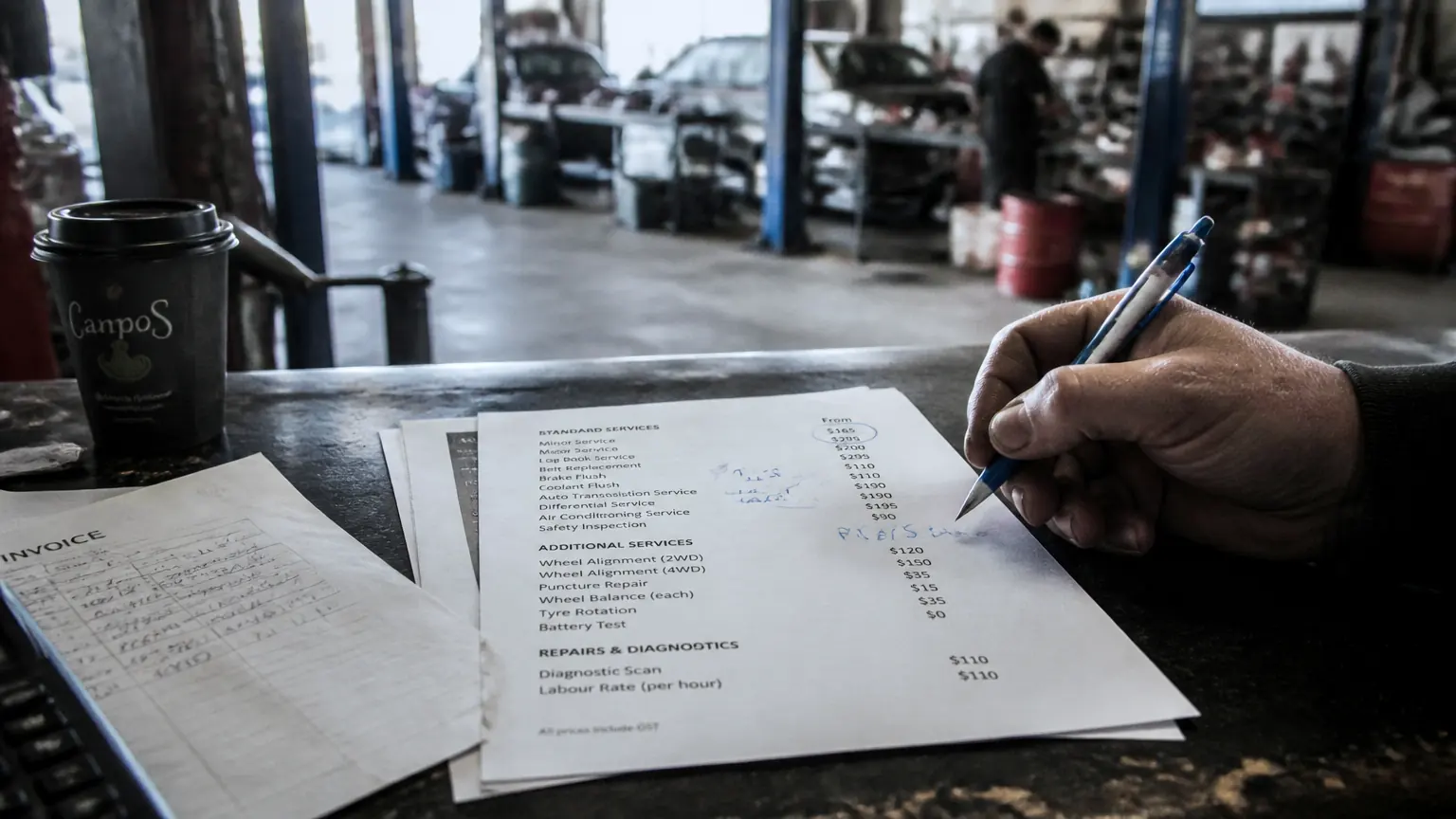
Most businesses have never tested their own prices.
I ran the annual labour and service price review at Kmart Tyre & Auto Service, a 249-store Wesfarmers business. One review cycle. More than $6M in first-year revenue growth.
Not from working harder. Not from more customers. From pricing the work the business was already doing at what it was actually worth.
The uncomfortable part: most founder-led businesses between $3M and $30M are running prices set years ago, adjusted by gut feel, discounted by whoever answers the phone.
You don't need a 249-store network to fix this. The method scales down. A structured review looks at the price architecture, the path from list price to the cash that actually lands, and the leakage in between, then sequences the changes so volume can be watched while they land.
That work was delivered in a salaried operating role before Ajility was founded, not as an Ajility client engagement. The method is now what Ajility does, for founder-led businesses, at founder-led prices, published on the site.
If you haven't tested your prices in the last two years, that's the first conversation to have.
See the pricing and revenue management specialisation
For the full case, read What a tyre pricing strategy is actually worth.
Questions founders ask
Common questions
How do I improve operations across a multi-store retail business?
- Standardise how each store runs, put the same weekly measures in front of every store manager, and compare stores on margin, labour cost and stock as well as sales. Pricing is often the biggest untested lever across a network.