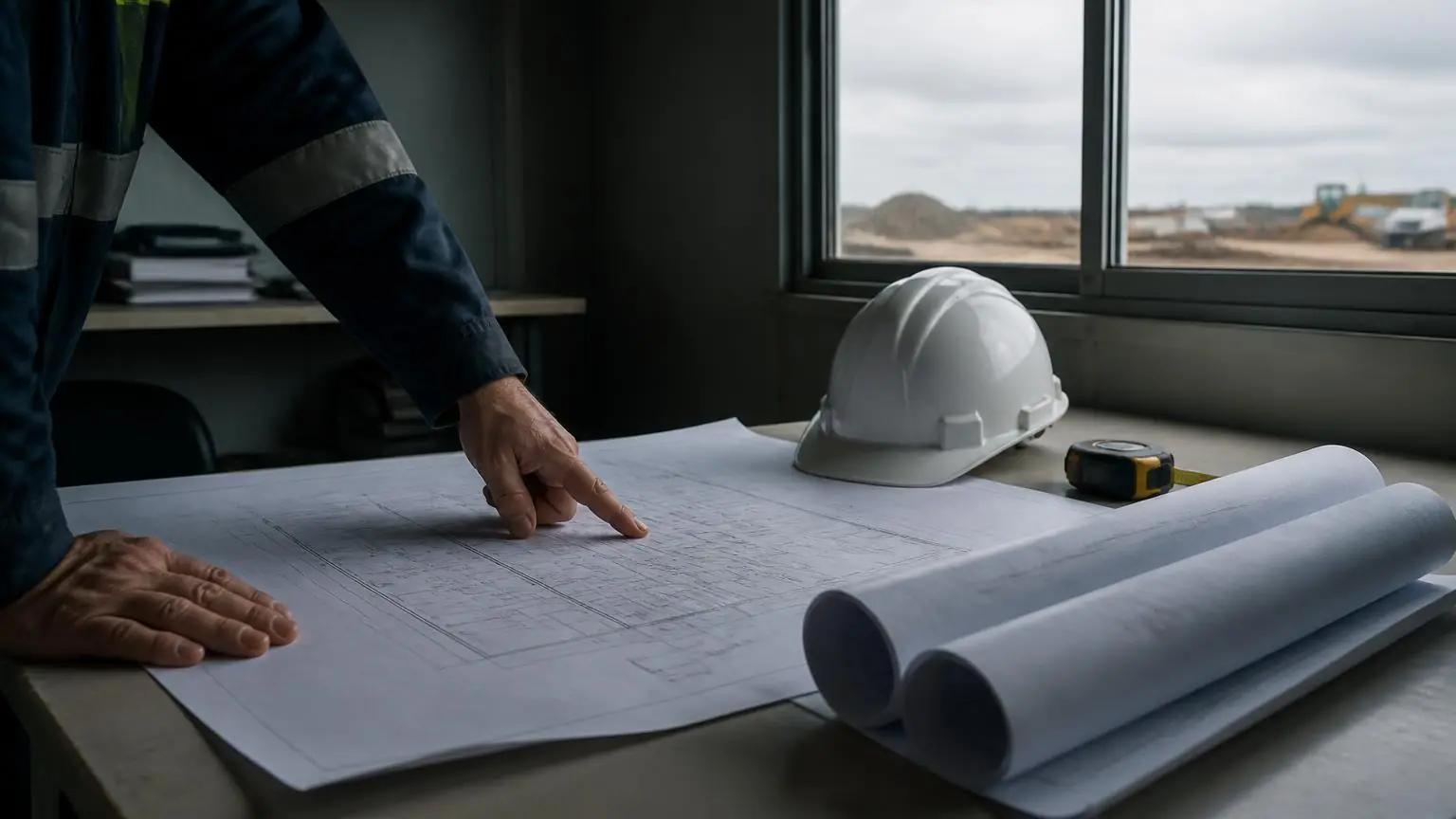
Every Australian state and territory has a construction Security of Payment Act. It gives subcontractors and suppliers a fast, statutory way to get paid: serve a valid payment claim, and if the builder does not answer it properly and on time, the amount can become due or go to a quick adjudication. Most small contractors only reach for the Act when they are already owed too much to absorb. The businesses that get paid run every claim as if they might need the Act, from the first invoice on the job.
The plain version: the Act only protects claims that were made properly and on time. That is an operating habit, not a legal one.
The basics
How the Security of Payment Act works, in plain terms
The detail differs by state. NSW has the Building and Construction Industry Security of Payment Act 1999; Western Australia has the Building and Construction Industry (Security of Payment) Act 2021; each other state and territory has its own. The broad sequence is similar:
Payment claim. You serve a claim for work done, in the form and at the time the Act and your contract allow.
Payment schedule. The party you claimed from must respond within a short, fixed period with a schedule saying what they will pay and why. If they do not, in many states the amount claimed becomes payable.
Adjudication. If the schedule is short or the money does not arrive, you can apply for adjudication through an authorised body, which decides quickly on the documents.
The time limits are short and strictly applied, and they are different in each state. Check them with your state regulator, such as NSW Fair Trading or the WA Building and Energy service, and get advice from a construction lawyer before you rely on them.
Why now
Subcontractors not paid: why builder failures hit trades first
When a builder or developer gets into trouble, the subcontractors are usually the last to know and the first to wait. In September 2026, the developer Bathla Group went into administration owing about $3.4 billion, leaving roughly 2,500 homes stalled and a far larger pipeline in doubt. Collapses of that size are rare. The warning signs before smaller failures are not: payment schedules that arrive late or reduce claims without clear reasons, requests to hold invoices until next month, and site managers who stop answering about variations.
A trade business that sees those signs early can slow its exposure: claim promptly, pause new work until the last claim is paid, and stop financing the builder with labour and materials.
The habit
Payment claims and progress claims: six habits that protect cash
Claim on time, every time. Know the reference date in each contract and diarise every claim. Late or skipped claims are the most common reason the Act cannot help.
Make each claim stand on its own. Identify the work, the amount and, where your state requires it, the statement that the claim is made under the Act. A claim that is hard to read is easy to dispute.
Log variations the day they are instructed. Every instruction, who gave it and the price, written down and sent back. Unrecorded variations are the margin that disappears between the quote and the final claim.
Track every payment schedule against its deadline. Someone in the office should know, for every open claim, when the schedule is due and whether it arrived. That date is often where your rights are decided.
Watch exposure per customer. Know how much each builder owes you, including retentions and unbilled work. Set a limit, and when a builder passes it, the owner decides whether to keep working.
Tie claims to your cash forecast. A 13-week cash flow forecast built on the claim schedule shows, weeks ahead, what a late payment from one builder will do to your pay runs.
| Habit | Owner | When |
|---|---|---|
| Claim on time, every time | Contracts administrator or office manager | Every reference date |
| Make each claim stand on its own | Estimator or project manager | Every claim |
| Log variations the day they are instructed | Site supervisor | Same day |
| Track every payment schedule against its deadline | Office manager | Daily check |
| Watch exposure per customer | Owner or general manager | Weekly |
| Tie claims to the cash forecast | Whoever owns the 13-week forecast | Weekly |
How Ajility does it
Commercial control for contractors
Ajility's Project and Commercial Control work installs the commercial routine a contracting business runs on: a claims calendar for every contract, a variation register with a named owner, live job costing, exposure limits by customer, and a weekly meeting where supervisors and the office answer for each job's cash and margin. In an electrical contractor I ran in-house earlier in my career, this kind of discipline is what took overhead from 11 per cent of sales to under 7 per cent inside a year. Ajility does not give legal advice and does not act in adjudications; that stays with your lawyer. Prices are published on the packages page.
To see how exposed your business is before talking to anyone, the free Operating Scan takes about six minutes.
Questions founders ask
Common questions
What is the Security of Payment Act?
- Each Australian state and territory has a construction Security of Payment Act that gives people who carry out construction work or supply materials a statutory right to progress payments and a fast adjudication process if they are not paid. NSW's is the Building and Construction Industry Security of Payment Act 1999, and Western Australia's is the Building and Construction Industry (Security of Payment) Act 2021.
What happens if a builder does not send a payment schedule?
- In many states, if a valid payment claim is not answered with a payment schedule within the time the Act allows, the claimed amount can become payable and you may be able to recover it or apply for adjudication. The rules and time limits differ by state, so check with your state regulator or a construction lawyer.
How long does a builder have to respond to a payment claim?
- It depends on the state and the contract. In NSW, for example, a payment schedule is generally due within the time set by the contract or 10 business days after the claim is served, whichever comes first. Other states set different periods.
How can a subcontractor protect itself if a builder is in financial trouble?
- Claim promptly and correctly under the Act, track every payment schedule against its deadline, record variations as they are instructed, set an exposure limit per builder and stop new work when it is passed. Get legal advice early if payments start slipping.